

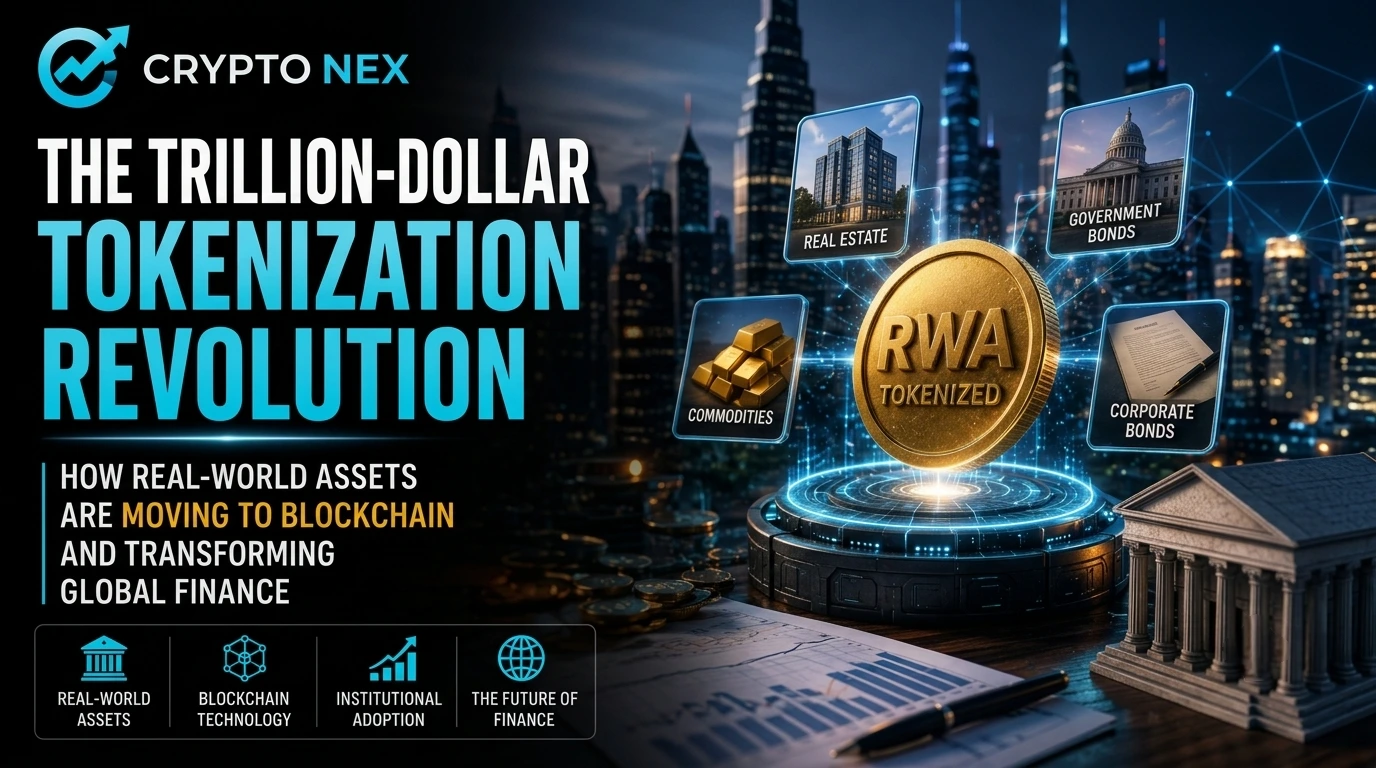
The Trillion-Dollar Tokenization Revolution: How Real-World Assets Are Moving to Blockchain
For years, cryptocurrency has been associated primarily with speculative trading, price volatility, and digital-native assets such as Bitcoin and Ethereum. While these innovations transformed the financial landscape, a much larger shift is quietly unfolding behind the scenes—one that could ultimately have a greater impact on global finance than cryptocurrencies themselves.
That shift is known as Real-World Asset (RWA) Tokenization.
Banks, asset managers, financial institutions, and technology companies are increasingly exploring ways to move traditional assets onto blockchain networks. From government bonds and corporate debt to real estate, commodities, private credit, and investment funds, trillions of dollars in assets could eventually be represented as digital tokens.
Many industry experts believe tokenization may become one of the most significant developments in modern financial history.
What Is Asset Tokenization?
Asset tokenization is the process of converting ownership rights of a real-world asset into digital tokens recorded on a blockchain.
Each token represents a portion or all of an underlying asset. These tokens can then be transferred, traded, stored, or managed through blockchain-based infrastructure.
In simple terms, tokenization creates a digital representation of ownership that can move more efficiently through financial systems.
For example, instead of purchasing an entire commercial building, investors could purchase tokenized shares representing a fraction of that property. Likewise, bonds, commodities, and investment funds can be divided into digital units that are easier to access and trade.
Why Financial Institutions Are Paying Attention
The growing interest in tokenization is not being driven solely by the cryptocurrency industry.
Major financial institutions are investing heavily in tokenization infrastructure because they see opportunities to improve efficiency, reduce costs, and modernize capital markets.
Traditional financial systems often rely on multiple intermediaries, manual reconciliation processes, settlement delays, and fragmented record-keeping systems.
Blockchain technology offers an alternative approach through transparent and shared ledgers capable of updating ownership records in near real time.
For institutions managing billions of dollars, even small operational improvements can generate significant economic benefits.
The Market Opportunity Could Be Massive
One reason tokenization has attracted enormous attention is the size of the opportunity.
The global value of real-world assets reaches into the hundreds of trillions of dollars and includes:
- Government bonds
- Corporate bonds
- Commercial and residential real estate
- Private equity
- Commodities
- Infrastructure projects
- Investment funds
- Intellectual property rights
Even if a small percentage of these assets migrate to blockchain networks, the impact on financial markets could be transformative.
Unlike many speculative crypto projects, tokenization focuses on assets that already exist and generate real economic value.
How Tokenization Could Transform Real Estate Investing
Real estate is often cited as one of the strongest use cases for tokenization.
Traditionally, investing in property requires significant capital, complex legal structures, and long settlement times.
Tokenization could allow investors to buy fractional ownership in properties through blockchain-based tokens, lowering entry barriers and improving liquidity.
This model could create more accessible investment opportunities while giving property owners access to a broader pool of capital.
The Rise of Tokenized Bonds
Government bonds and fixed-income products are emerging as another major category within tokenized finance.
Institutional investors often prioritize predictable returns, stability, and liquidity. By moving these assets onto blockchain infrastructure, issuers may improve settlement efficiency and reduce administrative costs.
Many analysts believe tokenized bonds could become one of the largest segments of the tokenized asset market over the next decade.
Why Blockchain Matters
Without blockchain technology, tokenization would simply be another digital database.
Blockchain provides several advantages:
- Transparent ownership records
- Immutable transaction histories
- Programmable financial assets
- Automated compliance capabilities
- Faster settlement times
- Reduced reliance on intermediaries
These capabilities explain why financial institutions increasingly view blockchain as a foundational layer for future financial infrastructure.
Challenges Still Remain
Despite its potential, tokenization faces several obstacles.
Regulatory frameworks continue to evolve across jurisdictions, legal recognition of tokenized ownership varies by country, and interoperability between blockchain networks remains a technical challenge.
Institutions must also address cybersecurity risks, custody requirements, investor protection standards, and compliance obligations before large-scale adoption becomes possible.
Why Investors Should Watch This Trend Closely
Tokenization is more than a technology trend—it represents a potential redesign of financial infrastructure.
While crypto markets often focus on short-term price movements, tokenization addresses a far larger opportunity: the digital transformation of global capital markets.
If adoption accelerates, tokenized assets could become a bridge connecting traditional finance with blockchain technology, creating new opportunities for institutions, businesses, and investors worldwide.
Key Developments to Watch
- Expansion of tokenized government bonds.
- Growth of tokenized real-estate platforms.
- Institutional adoption of blockchain infrastructure.
- Regulatory clarity across major markets.
- Integration between traditional banks and blockchain networks.
- Participation from global asset managers.
Conclusion
The next major chapter of blockchain adoption may not be driven by speculative trading or meme coins.
Instead, it could be driven by the tokenization of real-world assets.
By bringing bonds, real estate, funds, commodities, and other traditional assets onto blockchain networks, tokenization has the potential to modernize financial markets, improve efficiency, and unlock new forms of investment access.
While challenges remain, the direction is becoming increasingly clear.
The discussion is no longer about whether blockchain can support real-world assets. The question is how quickly global financial markets will adopt this new infrastructure.
As institutions continue investing in tokenization, the industry may be witnessing the early stages of a transformation that could reshape finance for decades to come.
Key Topics
RWA, Tokenization, Blockchain, Institutional Adoption, Digital Assets, Web3, Tokenized Real Estate, Tokenized Bonds, Financial Infrastructure.
Disclaimer: This article is for informational and educational purposes only and does not constitute financial, investment, or legal advice. Readers should conduct their own research before making financial decisions.
